

To the Editor:
Filsuvez® (birch triterpenes) topical gel received approval from the European Medicines Agency in 2022 and from the U.S. Food and Drug Administration in 2023 for the treatment of wounds associated with dystrophic and junctional epidermolysis bullosa (EB) in patients aged 6 months and older. This agent is indicated for partial-thickness wounds and is applied as a 1-mm layer to the affected area, covered with a sterile non-adhesive dressing, and continued until wound healing is achieved or discontinued if infection occurs.1
Filsuvez® is a sterile topical gel containing 10% birch triterpenes (betulin, lupeol, erythrodiol, betulinic acid, and oleanolic acid) formulated with sunflower oil. Triterpenes have demonstrated antibacterial, antifungal, antiviral, anti-inflammatory, antitumoral, and wound-healing properties.2
The EASE trial – a randomized, double-blind, placebo-controlled study – showed that Filsuvez® achieved a higher rate of complete wound closure within 45 days compared with placebo (41.3% vs. 28.9%), although efficacy varied by EB subtype. Notably, patients with junctional EB (JEB) exhibited lower rates of wound closure (18.2% with Filsuvez® vs. 26.7% with placebo), suggesting subtype-specific responsiveness. The mechanism of action remains incompletely defined, and systemic absorption of betulin is minimal, with most subjects exhibiting undetectable plasma levels following topical application.3
We report the case of an 80-year-old male with JEB type 5A (due to a homozygous missense variant on the ITGB4 gene), and chronic partial-thickness ulcerations (Fig. 1). The ulcer on his left leg had been present for 9 months without reduction in size and had been complicated by recurrent superinfections with multidrug-resistant Pseudomonas aeruginosa, necessitating multiple hospitalizations for intravenous antibiotic therapy.
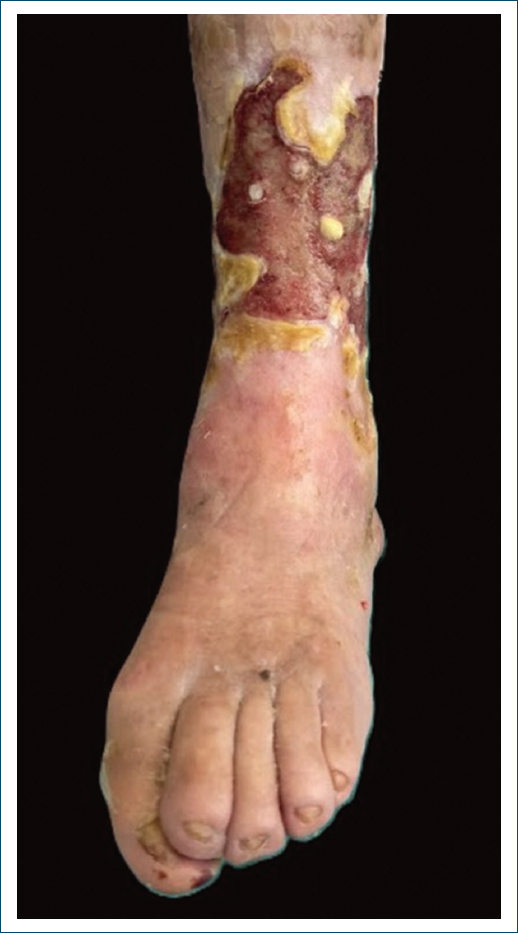
Figure 1. Ulcer located on the anterior aspect of the left leg.
An Exceptional Drug Access request was submitted to Infarmed (the Portuguese national authority for medicines and health products) to obtain Filsuvez® for this patient. Following approval, the patient was admitted to initiate therapy. On admission, he presented with a malodorous, greenish exudate from the left leg wound, from which P. aeruginosa was again isolated. He received 7 days of intravenous antibiotic therapy before starting daily topical Filsuvez®.
After 30 days of treatment, no improvement was observed in the size or depth of the chronic left leg ulcer (Fig. 2). Treatment was suspended due to lack of efficacy and also suspicion of superinfection. This observation aligns with the EASE trial findings, which reported lower efficacy of Filsuvez® in JEB compared to dystrophic EB.3
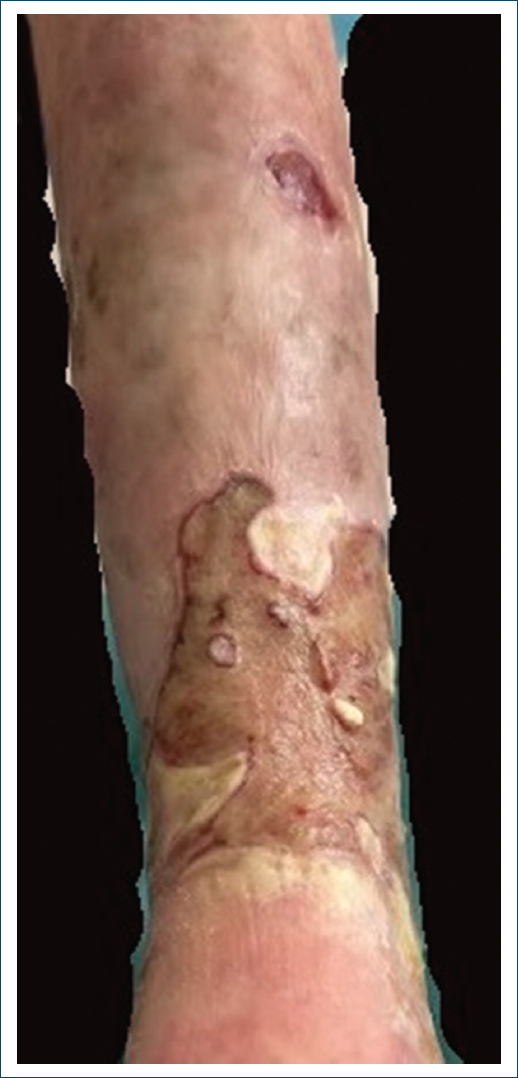
Figure 2. Ulcer located on the left leg with the same dimension after a 30-day daily treatment with birch triterpenes gel.
Potential factors contributing to the differential healing response include advanced age, wound chronicity, microbial colonization, comorbid etiologies (e.g., chronic venous insufficiency), and EB subtype-specific pathophysiology.
EB represents a heterogeneous group of rare inherited mechanobullous disorders characterized by skin fragility and impaired wound healing, predisposing patients to blister formation after minimal trauma. EB is classified into four major subtypes: EB simplex, JEB, dystrophic EB, and Kindler syndrome.4 Chronic EB wounds (lasting > 6 weeks) predispose to recurrent infections with multidrug-resistant organisms, frequent hospitalizations, and the development of squamous cell carcinoma, particularly in recessive dystrophic EB.3
Currently, there is no curative therapy for EB. Management remains multidisciplinary, focusing on wound care, infection control, and the prevention of trauma to fragile skin.5 Emerging topical agents such as Filsuvez® may represent an important addition to supportive care, particularly for patients with dystrophic EB, although efficacy may be limited in other EB subtypes.3 These observations, combined with the EASE trial data, indicate that the approval of Filsuvez® for JEB should be revisited to ensure it remains aligned with the available evidence.
Funding
None.
Conflicts of interest
None.
Ethical considerations
Protection of humans and animals. The authors declare that the procedures followed complied with the ethical standards of the responsible human experimentation committee and adhered to the World Medical Association and the Declaration of Helsinki. The procedures were approved by the institutional Ethics Committee.
Confidentiality, informed consent, and ethical approval. The authors have followed their institution’s confidentiality protocols, obtained informed consent from patients, and received approval from the Ethics Committee. The SAGER guidelines were followed according to the nature of the study.
Declaration on the use of artificial intelligence. The authors declare that no generative artificial intelligence was used in the writing of this manuscript.
