

Dear Editor,
Fifty years after the country’s independence, the Angolan Association of Dermatology and Venereology (AADV) was effectively instituted in Luanda on July 15th, 2025, opening a new page in the development of the discipline.
Dermatology is progressively emerging in Angola as a well-recognized medical specialty1,2: the Angolan College of Dermatology and Venereology was created in 2009 under the umbrella of the Medical Order, with a focus on the residency training program, ethics, deontology, and the suitability of dermatologists’ professional qualifications; pending the creation of a professional society, the college was also assigned some functions typically performed by medical societies, such as continuing medical education.
AADV’s mission is now to advance advocacy on skin and hair diseases, continuing education, clinical care, investigations, and to stimulate collaboration with other national and international societies, partner institutions, and industry.
Challenges faced by Sub-Saharan African (SSA) societies of dermatology
Despite their significant burden, there is low awareness of skin conditions among health workers and the general public. Weak surveillance systems further mask their true public health impact, and health workers have, in general, insufficient diagnostic capacity and access to treatment.
While simple skin conditions can often be managed by primary healthcare providers, such professionals are often unprepared to diagnose and treat less common skin, nail, mucous membrane, and hair diseases, resulting in significant delays and errors of diagnosis and treatment2.
This situation is compounded by the low number of trained dermatologists (on average, circa de 1/400.000 pop.)1 who are mostly concentrated in major cities, leaving poor-resource regions without the needed attention and care from trained professionals.
To counter-balance the limited access to quality skin care for many people living in rural and peri-urban areas, the working conditions and posting of trained dermatologists should be improved in order to enhance the capacity of the public health services.
Moreover, despite a growing interest in cosmetology, some key subspecialties, such as pediatric dermatology and histopathology, should be given particular attention to supplement standard clinical competen- cies2.
Except for the Dermatology Society of South Africa, founded in 1946, most SSA dermatology societies, including the African Society of Dermatology and Venereology (ASDV)3, are – if existing – still relatively young, with few members and limited resources to match their aspirations to advance skin health4.
In May 2025, the World Health Assembly unanimously approved a resolution on “Skin diseases as a global public health priority,”5 which recognized the multiple challenges and key actions requiring urgent attention from member states and other stakeholders.
How AADV can advance skin health in Angola
The AADV can draw on its future members’ expertise to organize clinical conferences and national days to mobilize, screen and respond to the needs of people with albinism, vitiligo and neglected tropical diseases6, giving a voice to those suffering from stigma and discrimination.
Taking advantage of improved local internet services and the availability of new communication tools, the AADV can promote the use of digital technologies to enhance the capacity building of local personnel with the support of dermatologists.
The mobilization of incentives and support to promote epidemiological and clinical investigations is another AADV priority.
Angola was the first African Portuguese-speaking country (PALOP) to join the International League of Dermatology Societies (ILDS) in 2018 (Fig. 1)6 and AADV members will be further encouraged to take advantage of the multiple presential and online events, courses, and other education materials offered by international societies such as the ILDS, International Foundation of Dermatology, ASDV, and the Ibero-Latin American College of Dermatology (CILAD).
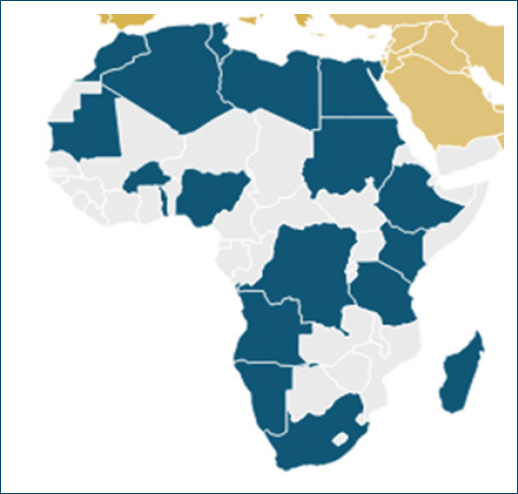
Figure 1. African ILDS members (adapted from ILDS 2025 Members Map6). ILDS: International League Of Dermatology Societies.
During the 4th ASDV conference held in Tunis in 20243, which was attended by more than 600 dermatologists from 24 African countries, Angola was elected as the focal point for the PALOP dermatologists, which shall be encouraged to attend ASDV meetings to learn about the latest scientific and clinical research in Africa.
Last but not least, the strengthening of academic relationships with Brazilian and Portuguese institutions also offers great opportunities for continuing education. It is worth mentioning the support which was already granted to young Angolan dermatologists for postgraduate training (e.g., from the Unidade Local de Saúde Coimbra), as well as the support to participate in scientific conferences such as the Porto “Update on Dermatology treatments” international meetings7. Gracious access to the PJDV has been provided to Angolan dermatologists by the Sociedade Portuguesa de Dermatologia e Venereologia7.
Conclusion
Dermatology in Angola and other SSA countries is facing multiple challenges, including high incidence and prevalence of skin diseases, lack of skilled dermatologists, weak laboratory infrastructure, and increasing costs of drugs. In Angola, the AADV can play a catalytic role for country-level coordinated action to improve continuing education, investigations, access to laboratory diagnostic capacities, and to essential medicines, integration with other programs, innovative service delivery models, epidemiologic surveillance, and general awareness on skin diseases.
Funding
None.
Conflicts of interest
None.
Ethical considerations
Protection of humans and animals. The authors declare that no experiments involving humans or animals were conducted for this research.
Confidentiality, informed consent, and ethical approval. The study does not involve patient personal data nor requires ethical approval. The SAGER guidelines do not apply.
Declaration on the use of artificial intelligence (AI). The authors declare that no generative artificial intelligence was used in the writing of this manuscript.
