

A 72-year-old woman with hypertension, diabetes mellitus, hypothyroidism, dyslipidemia, and a single kidney presented with a painful ulcer on the dorsum of her right hand, with a 5-month evolution (Fig. 1). Skin biopsy revealed a chronic inflammatory infiltrate and structures suggestive of Leishmania (Fig. 2). Polymerase chain reaction was positive for leishmaniasis. Intravenous liposomal amphotericin B was initiated, with the dose adjusted to renal function, showing significant clinical improvement. However, 3 months after discharge, a local recurrence occurred. Treatment was then performed with intralesional infiltration of meglumine antimoniate (Glucantime®) – 2 mL per session (4 sessions). The lesion was divided into eight quadrants, with 0.25 mL injected per quadrant, resulting in complete remission (Fig. 3). The patient remains clinically cured after 4 years and continues outpatient follow-up.
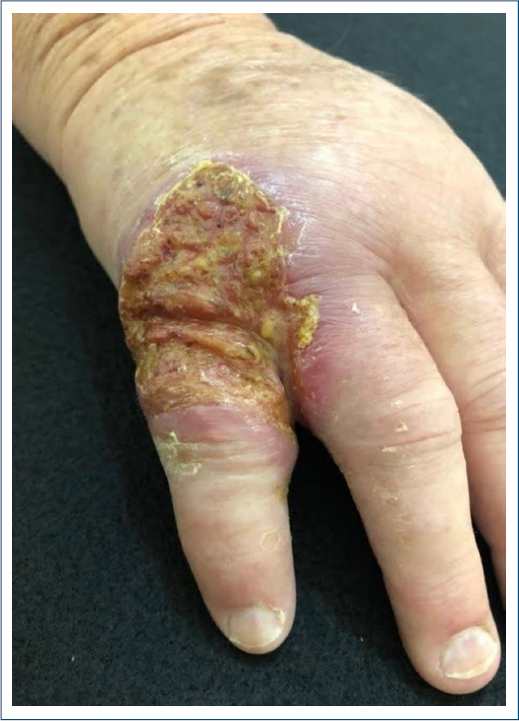
Figure 1. American cutaneous leishmaniasis – initial lesion.
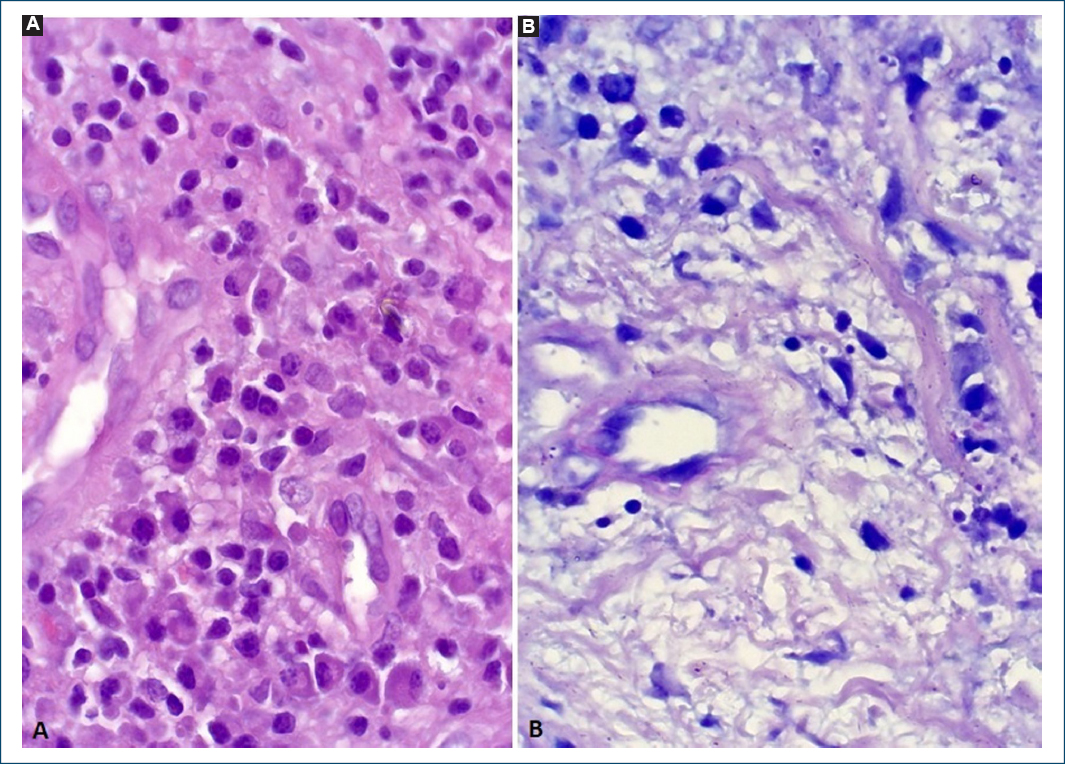
Figure 2.. Histopathology – chronic inflammatory infiltrate and structures suggestive of leishmania. A: H&E and eosin. B: giemsa, ×400.
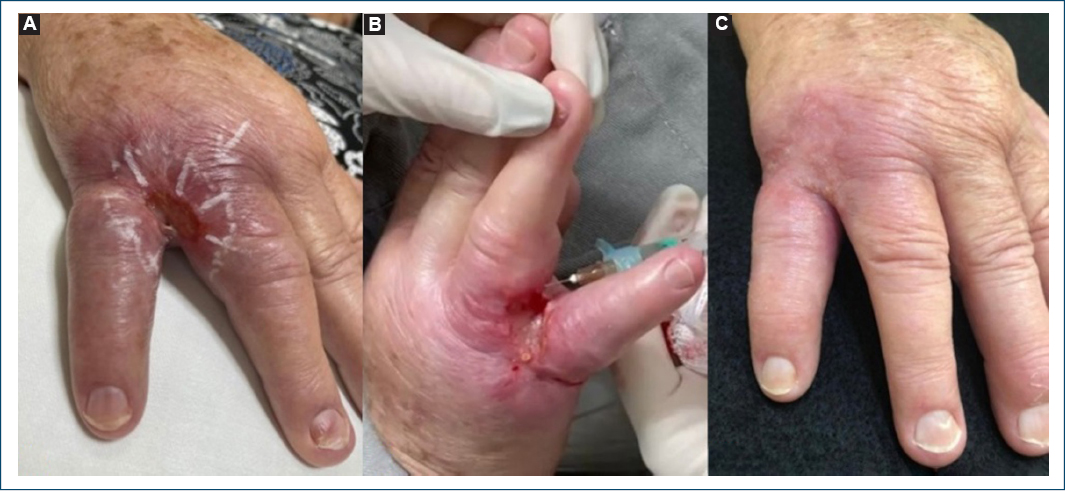
Figure 3.. Treatment with intralesional antimoniate. A: demarcation of the areas to be injected, B: intraoperative. C: final result (6 months).
American cutaneous leishmaniasis (ACL) is a neglected infectious disease with worldwide distribution, caused by protozoa of the genus Leishmania and transmitted by phlebotomine sandflies.1–3 In Brazil, it remains a public health concern, particularly in socioeconomically vulnerable regions. Treatment of ACL is challenging due to the toxicity of available drugs and the possibility of relapse.1 This case highlights the therapeutic complexity of ACL in patients with multiple comorbidities. Liposomal amphotericin B proved effective, although dosage adjustments were required. The relapse was successfully managed with intralesional antimoniate, supporting its use as a safe and effective alternative to minimize systemic toxicity.4 In conclusion, an individualized approach and rational use of available therapies, combined with continuous clinical monitoring, are crucial for therapeutic success, especially in patients at increased risk of complications.
Funding
No funding was received for this study.
Conflicts of interest
There are no conflicts of interest to disclose.
Ethical considerations
Protection of humans and animals. The authors declare that no experiments involving humans or animals were conducted for this research.
Confidentiality, informed consent, and ethical approval. The authors have followed their institution’s confidentiality protocols, obtained informed consent from patients, and received approval from the Ethics Committee. The SAGER guidelines were followed according to the nature of the study.
Declaration on the use of artificial intelligence. The authors declare that no generative artificial intelligence was used in the writing of this manuscript.
